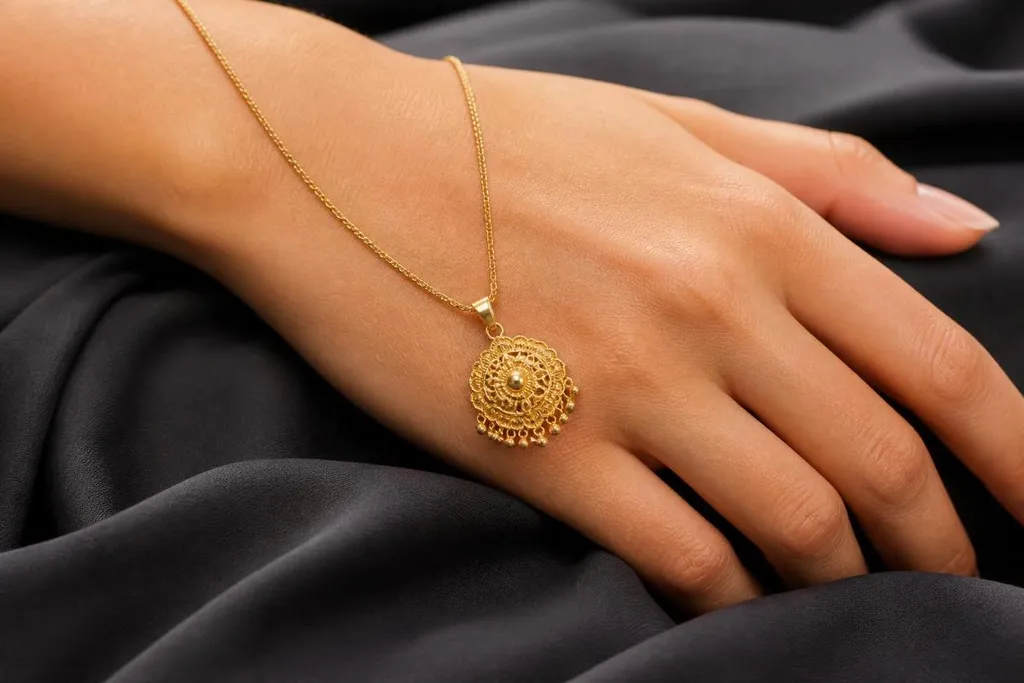
A necklace occupies one of the most visually important areas of an outfit. Its length determines where the eye is drawn, while the scale of a pendant or gemstone can change how a neckline feels. A delicate piece resting near the collarbone creates a very different impression from a longer necklace worn over clothing, even when both use similar precious metals and stones.
For anyone looking to order necklaces from Lily Arkwright, choosing well means considering more than the necklace in isolation. Chain length, pendant proportions, gemstone style and metal all influence how easily a piece works with different wardrobes. The most versatile designs tend to occupy a useful middle ground: distinctive enough to add interest when worn alone, yet refined enough to layer or coordinate with other fine jewellery.
Match Necklace Length to the Neckline
Length affects both visibility and proportion. A necklace that disappears beneath a neckline cannot contribute much to the overall look, while one that finishes directly against the edge of a garment may create visual competition.
Shorter necklaces typically sit around the base of the neck or collarbone. They work particularly well with open necklines because the jewellery remains visible against the skin. A simple pendant can also complement a V-neck by repeating its downward line without filling the entire space.
Crew-neck clothing often benefits from a necklace that either sits clearly above the neckline or extends sufficiently below it. A piece finishing almost exactly on the fabric edge can look less intentional.
Longer necklaces create more vertical emphasis and can work effectively over knitwear, dresses and higher necklines. They also provide additional opportunities for layering.
Individual proportions matter as much as clothing. The same chain length can sit differently depending on neck size, height and where the pendant naturally rests, so measurements should be treated as guidance rather than a universal rule.
Choose a Pendant Scale That Fits Its Purpose
A necklace intended for everyday wear usually benefits from a different scale than one selected primarily for formal occasions.
Smaller pendants and restrained gemstone designs can be worn comfortably with workwear, casual clothing and other jewellery. They add a point of light without dominating the neckline and are particularly useful for someone who rarely changes jewellery during the day.
A larger centre stone or more elaborate arrangement naturally creates greater presence. That can be desirable when the necklace is intended as the principal jewellery feature.
Size should therefore have a styling purpose. Someone may choose a larger gemstone because they frequently wear simple, open-neck clothing and want the pendant to provide the focal point. Another wearer may prefer a smaller design because they regularly combine a necklace with statement earrings and want the pieces to remain balanced.
The chain should also suit the pendant. A very fine chain can look elegant with a delicate setting, while a more substantial pendant may require greater visual and structural support.
Use Metal and Gemstone Colour Deliberately
Precious-metal colour can subtly change how a necklace interacts with both gemstones and clothing.
Platinum and white gold provide a cool, clean setting for colourless stones and work naturally with many blue and green gemstones. Yellow gold introduces warmth and can create attractive contrast around cooler colours. Rose gold offers a softer character, particularly alongside pink, peach and neutral stones.
Coloured gemstones can make an otherwise simple necklace far more distinctive. Sapphire, emerald, ruby and softer-toned stones allow the jewellery to introduce colour without requiring an elaborate design.
Existing pieces are useful reference points. If earrings or rings are worn almost every day, choosing a necklace with a related metal or gemstone can make the entire jewellery collection easier to combine.
Exact matching is unnecessary. Repeating one element—metal tone, stone colour or design character—is often enough to create cohesion.
Layer Necklaces Without Creating Clutter
Layering works best when each necklace has its own visual space.
Using different chain lengths prevents pendants from sitting directly on top of one another. Scale should vary too: a fine upper necklace can provide a subtle starting point, while a slightly larger pendant below creates a clear focal point.
Not every layer needs a gemstone. Combining a simple chain with a diamond or coloured-stone pendant can produce more definition than stacking several equally decorative pieces.
Practicality matters as well. Fine chains can tangle when worn closely together, particularly if they are similar in weight and length. Thoughtful spacing reduces this problem while keeping each design visible.
Regular care is worthwhile for frequently worn necklaces. Cosmetics, fragrance and skin oils can collect around settings and chains, so gentle cleaning and appropriate storage help preserve their appearance.
Final Thought
Choosing a necklace successfully is largely an exercise in proportion. Length determines how the piece interacts with a neckline, while pendant size, gemstone colour and metal establish its visual character.
Rather than searching for one necklace that works identically with every outfit, choose designs that complement the clothing and jewellery worn most often. A well-proportioned necklace should feel considered when worn alone, adaptable when layered and elegant enough to remain useful long after individual styling trends have changed.